Why Jacksonville's Climate Matters for Roofs
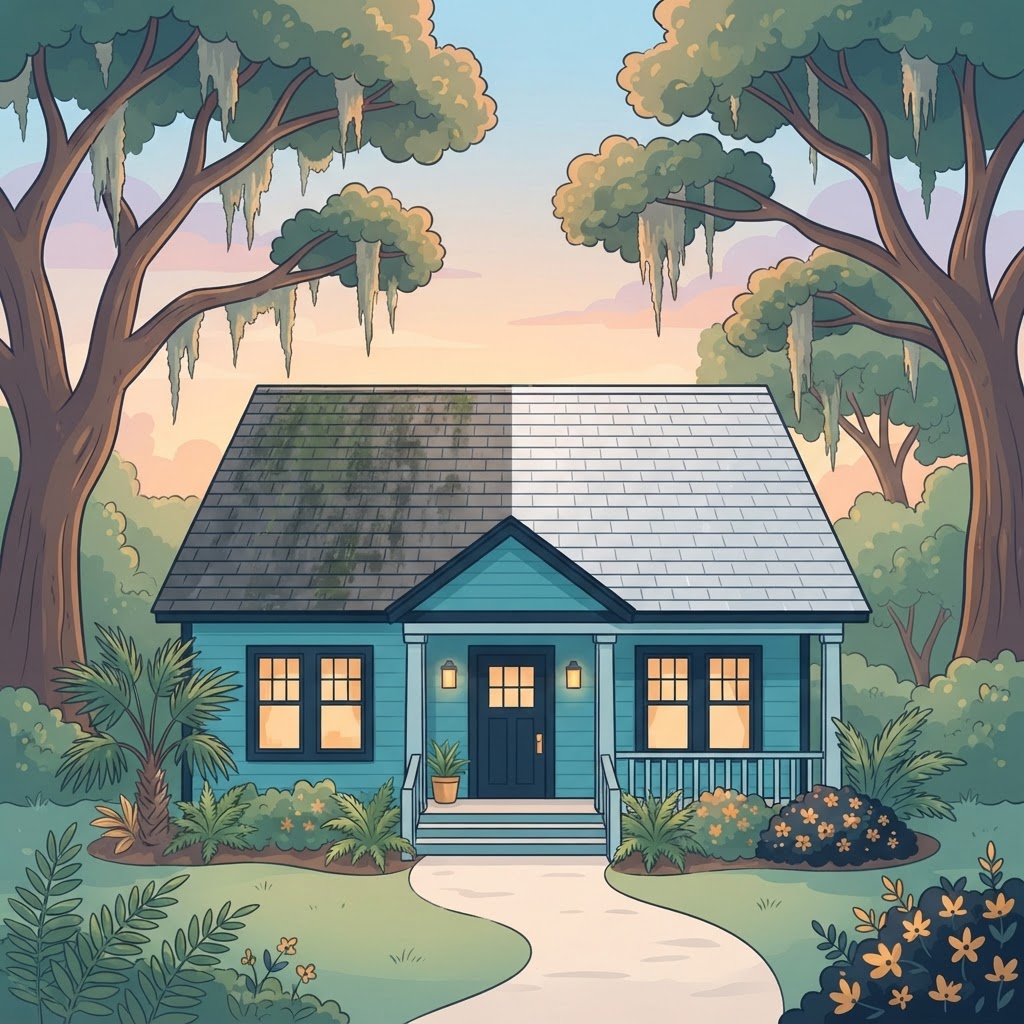
Jacksonville sits in a subtropical climate zone where humidity levels stay elevated for much of the year. Add in coastal salt air, frequent afternoon rain during storm season, and long stretches of warm temperatures, and you have an environment where moisture tends to linger on rooftops longer than in drier climates. This lingering moisture can contribute to conditions that support organic growth on roofing materials, including black streaks, algae, moss, and lichen.
Homeowners across Jacksonville often notice dark streaking or discoloration developing on their shingles, tiles, or metal roofing over time. While many factors can play a role, the area's humid subtropical climate is frequently part of the conversation when it comes to why roofs in Northeast Florida may show these signs sooner than roofs in other regions.
Understanding Black Streaks, Algae, Moss, and Lichen
Black streaks on roofs are commonly associated with Gloeocapsa magma, a type of organism that may appear as dark stains running down shingles. Algae growth can present as green or black discoloration, while moss tends to form thicker, raised patches, especially in shaded or consistently damp areas. Lichen, a combination of fungus and algae, can attach itself more firmly to roofing surfaces and may be more noticeable on tile or textured shingle roofs.
Humidity alone doesn't guarantee these issues will appear, but consistently moist conditions can create an environment where organic growth is more likely to develop and spread across roof surfaces. Shaded areas, north-facing slopes, and sections of the roof that stay damp longer after rain may show more pronounced growth compared to areas that dry out quickly in direct sunlight.
How Coastal Air and Storm Season Add to the Equation
Beyond humidity, Jacksonville's proximity to the coast introduces salt air into the mix, which can interact with roofing materials over time. During Florida's storm season, frequent rain events keep roofs wet for extended periods, and the warm temperatures that follow can create conditions favorable for organic growth to take hold. Pollen from surrounding trees and vegetation can also settle on rooftops, adding organic material that may contribute to staining or growth when combined with ongoing moisture.
All of these regional factors combine to make roof maintenance a more frequent consideration for Jacksonville homeowners compared to residents in drier or cooler parts of the country.
What a Soft Wash Roof Cleaning Involves
Roof washing is designed to treat organic growth at the source rather than attempting to blast it away with force. This approach uses low-pressure application of an appropriate cleaning solution to address black streaks, algae, moss, and lichen, followed by a gentle rinse that helps protect shingles, tiles, and metal roofing.
The process typically begins with an inspection of the roof material, its condition, and the extent of organic growth present. Nearby landscaping is wetted and sensitive areas are protected as appropriate before any application begins. From there, the cleaning solution is applied at low pressure to treat the growth, and treated surfaces are rinsed gently before a final inspection confirms the work is complete.
It's worth noting that high pressure is never used on the roof during this process. Roof washing also does not include gutter-interior cleaning, downspout flushing, or repairs to damaged or deteriorated roofing. Those are separate considerations for a home's overall exterior maintenance.
Why a Gentle Approach Fits Jacksonville Roofs
Given the humid, coastal conditions found throughout Jacksonville, roofing materials can already be dealing with moisture exposure on a regular basis. Using low pressure rather than high-pressure blasting helps avoid additional stress on shingles, tiles, or metal panels while still addressing the organic growth that has developed. This measured approach is meant to work with the roofing material rather than against it, treating the visible symptoms (the streaks, algae, moss, and lichen) without introducing unnecessary force to surfaces that may already be affected by years of Florida weather.
Maintaining Your Roof Between Cleanings
Because Jacksonville's climate doesn't change, organic growth can potentially return over time, particularly in shaded or consistently damp areas of a roof. Keeping an eye on early signs of streaking or discoloration can help homeowners decide when it may be time to schedule another roof wash. Trimming back overhanging tree limbs, when possible, may also help reduce shade and debris accumulation on certain sections of a roof, though this is a separate consideration from the roof washing service itself.
Regular observation of your roof's condition, especially after storm season or extended periods of high humidity, can help you stay ahead of buildup before it becomes more noticeable from the street or from neighboring properties.
Considerations Before Scheduling a Roof Wash
Every roof is different, and the extent of organic growth can vary based on the roofing material, the amount of shade the home receives, and how long the growth has had a chance to develop. An inspection prior to any cleaning helps determine the appropriate approach for your specific roof, whether it's asphalt shingles, tile, or metal roofing. This step ensures that the cleaning solution and rinse process are suited to your roof's material and condition.
Get a Free Custom Quote from Crystal Glow Florida
If you've noticed black streaks, algae, moss, or lichen forming on your roof, Jacksonville's humid climate may be part of the reason. A soft wash roof cleaning offers a way to address this organic growth without high pressure, helping restore your roof's appearance while working within the limits designed to protect your roofing material. Reach out to Crystal Glow Florida today to request a free custom quote and learn more about how roof washing can fit into your home's exterior maintenance routine.
Frequently Asked Questions
Why does Jacksonville seem to have more roof staining than other areas?
Jacksonville's humid subtropical climate, combined with coastal salt air and frequent rain during storm season, can create conditions where organic growth such as black streaks, algae, moss, and lichen is more likely to develop on roofing surfaces.
Does roof washing use high pressure to remove growth?
No. Roof washing relies on low-pressure application of an appropriate cleaning solution followed by a gentle rinse. High pressure is never used on the roof, which helps protect shingles, tiles, and metal roofing.
Will roof washing also clean my gutters?
Roof washing does not include gutter-interior cleaning or downspout flushing. It focuses specifically on treating organic growth on the roof surface itself.
How does the cleaning process work?
The process starts with an inspection of the roof material and the extent of growth, followed by wetting nearby landscaping and protecting sensitive areas. An appropriate cleaning solution is then applied at low pressure to treat the growth at the source, and the surface is rinsed gently before a final inspection.
Can roof washing fix damaged or deteriorated roofing?
No, roof washing does not include repairs to damaged or deteriorated roofing. It is focused on treating organic growth like black streaks, algae, moss, and lichen on otherwise intact roofing surfaces.
Ready to make it glow?
Get a Free Custom Quote Today
Ready to book roof wash? Request a free, no-obligation custom quote tailored to your home's size and condition.