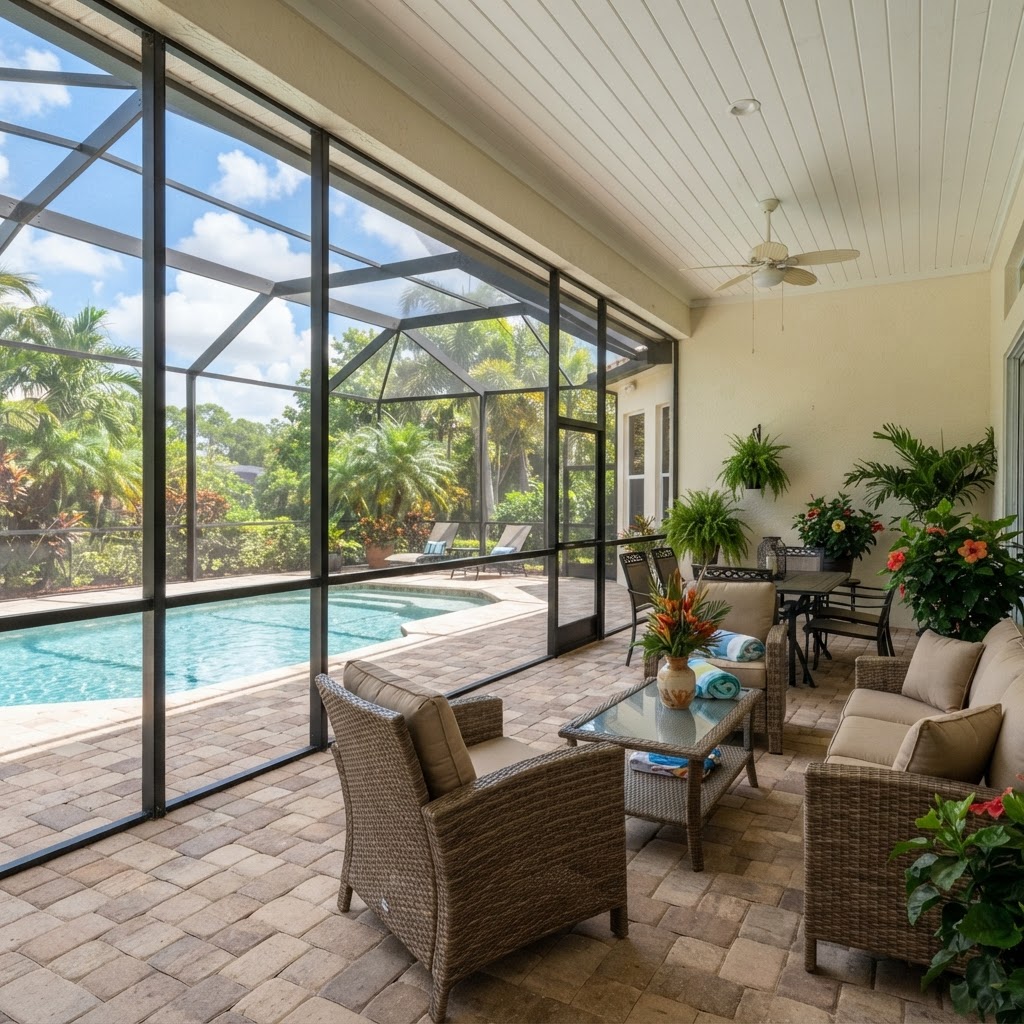
Why this service matters
A lanai provides an outdoor space with some protection from insects and debris, but its screens and framing still collect pollen, dust, webs, and organic growth. Cleaning helps restore the view and keeps the enclosure and floor more pleasant to use without treating delicate mesh like a concrete driveway.
What neglect can lead to
Accumulated debris can darken screens and collect along framing and floor edges. Damp floors may become slippery, while dirt can conceal loose screen attachments, damaged mesh, or deteriorating hardware. Corrosion and worn seals may require repair; removing grime does not reverse existing material damage.
How the problem develops over time
Screened enclosures catch pollen, windblown dust, webs, and residue that might otherwise pass through an open outdoor space. Deposits collect on mesh and along framing, while shaded flooring can hold damp organic films. Nearby vegetation and pool use can influence where residue accumulates. The mesh, frame coating, fasteners, door hardware, and floor are separate parts of the enclosure, each with its own condition and maintenance needs. Treating all of them like a concrete driveway risks damaging the more delicate components.
The consequences of waiting, and what cleaning cannot fix
As screens darken, visibility can become less clear and deposits may be harder to dislodge gently. Dirt can conceal tears, loose splines, worn door seals, or corrosion, while damp floor contamination may increase slipping risk. Cleaning does not restore stretched mesh, repair corroded fasteners, or correct a door that no longer closes properly. High pressure can tear screens or dislodge their attachments. A clean enclosure also cannot guarantee insect exclusion, because openings, damaged seals, and normal door use remain relevant. Repairs and suitable maintenance work together; washing is not a replacement for either.
Warning signs and a practical maintenance plan
Look for hazy mesh, debris along lower tracks, recurring slick patches, and visible tears or loose edges. Note pool proximity and discuss how furniture, electrical items, plants, and adjacent finishes should be handled. Have damaged mesh or unstable framing assessed before a wash. Ask whether screens, framing, doors, ceiling, and floor are included rather than assuming the entire enclosure is covered by one label. Crystal Glow must confirm the methods and access requirements for the specific materials. Continued observation and timely repairs are as important as removing visible grime.
What regular care helps prevent
Regular cleaning helps limit heavy deposits on screens and reduce organic films on floors. Gentle techniques help avoid torn mesh, damaged screen splines, and stripped finishes. Cleaning cannot guarantee an insect-free enclosure or correct drainage defects. Damaged screens should be repaired rather than subjected to aggressive washing.
When to schedule service and what to expect
Consider a visit when the enclosure looks hazy, webs collect in corners, or the floor stays slick. Confirm whether the quote covers screens, framing, ceiling, and floor. Nearby pools, plants, electrical items, and furniture require care. Existing damage should be identified before cleaning so expectations are clear.
Service scope and limitations
Process confirmation needed: Crystal Glow will confirm the method, equipment, suitable materials, and exact inclusions for this additional service before work is agreed. No unconfirmed treatment or result is promised. This care guidance is general homeowner information, not an unconfirmed Crystal Glow process or package. For soffits, fascia, and exterior gutter faces, the confirmed house-wash method applies only when those accessible, suitable areas are included in the quote.
Frequently Asked Questions
How often should lanai screens and floors be cleaned in Florida?
With Florida's heavy pollen seasons, humidity, and frequent storms, many homeowners find it helpful to have their lanai checked and cleaned more than once a year, especially near vegetation or a pool. The right frequency depends on surrounding trees, shade, and how the space is used, so a visual check for hazy screens or slick floor spots is a good guide between visits.
Will cleaning fix a screen that's torn or coming loose from the frame?
No, cleaning only addresses surface grime and cannot repair stretched mesh, loose splines, or corroded fasteners. If damage is present, it should be assessed and repaired separately, ideally before any washing is attempted, since aggressive cleaning could make existing damage worse.
Is it safe to clean lanai screens the same way a driveway is cleaned?
Screens and framing are far more delicate than concrete, so treating them the same way as a hard surface can tear mesh or dislodge attachments. Lanai care calls for gentle techniques suited to each material, which is why screens, frames, and floors are handled differently from driveways and other hard surfaces.
Why does my lanai floor get slippery even though it's covered?
Shaded, enclosed flooring can hold onto damp organic films that don't dry out as quickly as open surfaces, which may contribute to slick patches over time. Nearby pool splash-out and vegetation can also influence where residue collects, so periodic cleaning can help but won't correct underlying drainage issues.
Does a clean lanai enclosure mean bugs won't get in anymore?
Not necessarily. Clean screens improve visibility and appearance, but insect exclusion also depends on the condition of seals, door hardware, and whether the mesh has any small tears or gaps. If keeping insects out is a priority, it's worth having the framing and doors checked in addition to scheduling a cleaning.
Ready to make it glow?
Get a Free Custom Quote Today
Ready to book lanai cleaning? Request a free, no-obligation custom quote tailored to your home's size and condition.